Country
Car Rental in Austria
Відкрийте будь-яке місто напряму або перейдіть до пошуку з обраним напрямком.
Міста
Усі міста в Австрія
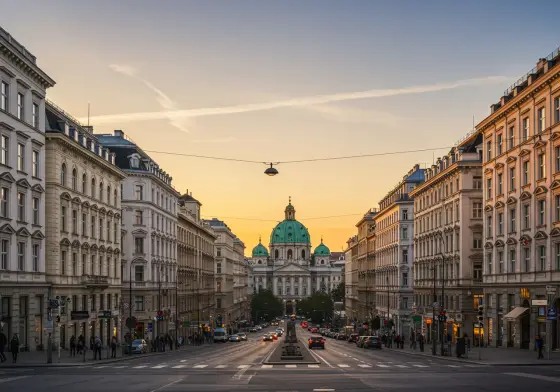

Car Rental in Austria
Did you know that Austria boasts some of Europe's most scenic drives, including the Grossglockner High Alpine Road, a breathtaking route that winds through the heart of the Alps? To truly immerse yourself in the dramatic landscapes and charming villages that define this spectacular country, a rental car is your essential companion. Unlock the magic of Austria at your own pace, from the glittering lakes of Salzkammergut to the historic streets of Vienna.

Прокатники
The Austrian car rental market features a mix of well-known international brands like Sixt, Hertz, and Europcar, alongside smaller local agencies. International companies offer broad coverage, particularly at airports and major cities, while local providers might offer more specialized vehicles or competitive rates in specific regions. Aggregators, such as RentoRika, streamline the booking process by comparing offers from various suppliers, often providing a wider selection and better deals than booking directly.
Які документи потрібні
To rent a car in Austria, you will generally need a valid driver's license from your home country, held for at least one year. An International Driving Permit (IDP) is highly recommended, especially if your license is not in English or a Latin alphabet, and is legally required for non-EU citizens. You'll also need your passport or national ID card and a credit card in the main driver's name. The minimum age to rent is usually 19 or 21, but drivers under 25 may face a young driver surcharge.
Оплата та депозит
Most rental companies in Austria require a major credit card (Visa, MasterCard, American Express) in the main driver's name for both payment and the security deposit. Debit cards are sometimes accepted for payment but rarely for the deposit. Prepayment online is often available and can secure better rates. The security deposit, which can range from a few hundred to over a thousand euros depending on the car category, is typically blocked on your credit card and released after the rental period, provided the car is returned in good condition. Deposit-free options are rare and usually involve purchasing premium insurance packages.
Скільки коштує оренда
Car rental prices in Austria vary significantly by season, car type, and booking lead time. Daily rates can start from an approximate 25 EUR during the low season, but average around 40-70 EUR. Expect prices to be highest during peak summer months (July-August) and around major holidays, reaching well over 100 EUR per day for popular models.
Ціна по місяцях, €
ПДР і штрафи
Driving in Austria is on the right-hand side, and overtaking is on the left. Seatbelts are mandatory for all occupants. Speed limits are generally 50 km/h in urban areas, 100 km/h on open roads, and 130 km/h on motorways. Winter tires are mandatory from November 1 to April 15, and snow chains may be required in certain mountain passes. A reflective safety vest and first-aid kit must be carried in the vehicle. Using a mobile phone without a hands-free system is prohibited. All motorways and expressways require a 'Vignette' (toll sticker), which is usually included with rental cars, but always confirm with your provider.
Парковки
Parking in Austrian cities can be challenging and expensive. Many city centers have 'short-stay' blue zones (Blaue Zonen) where parking is limited to a few hours and requires a parking disc (Parkscheibe) or ticket from a machine. Underground parking garages (Garagen) are common but can be costly. Outside city centers, parking is generally easier to find. Always check signs carefully for restrictions and payment requirements to avoid fines.
Заправки
Fuel stations are widely available throughout Austria. Unleaded petrol (Bleifrei) and diesel (Diesel) are standard. E5 and E10 petrol are common. Fuel prices are generally comparable to other Western European countries, fluctuating but typically around 1.60-1.90 EUR per liter for petrol and 1.50-1.80 EUR for diesel. Motorway service stations tend to be more expensive than those in towns or off main routes.
Яке авто обрати
For city driving and short trips, a compact or economy car is ideal due to narrow streets and easier parking. If you plan to explore the mountainous regions or travel with more luggage, a mid-size sedan or an SUV will offer more comfort and better handling on winding roads. In winter, an all-wheel-drive vehicle might be beneficial for tackling snowy conditions, especially in higher altitudes.
Плюси
- Excellent road network, well-maintained and scenic.
- Freedom to explore remote alpine villages and stunning natural parks.
- Convenient for day trips to neighboring countries.
- Access to ski resorts and hiking trails not easily reachable by public transport.
- Ability to carry luggage and sports equipment easily.
Мінуси
- Vignette (toll sticker) required for motorways, though usually included in rentals.
- Parking in major cities can be expensive and difficult to find.
- Strict traffic laws and potential for significant fines.
- Winter driving conditions can be challenging and require specific equipment.
- Higher rental costs during peak tourist seasons.
Також рекомендуємо
Часті запитання
Do I need an International Driving Permit (IDP) in Austria?
Yes, if your national driver's license is not from an EU/EEA country or is not in English or a Latin alphabet, an IDP is legally required and highly recommended for all non-EU drivers to avoid potential issues.
Are there tolls on Austrian roads?
Yes, all motorways and expressways in Austria require a 'Vignette' (toll sticker). Rental cars usually come with this included, but it's essential to confirm with your rental provider. There are also separate tolls for some tunnels and mountain passes.
What are the winter driving requirements in Austria?
From November 1st to April 15th, winter tires are mandatory. In some mountainous areas, snow chains may also be required, and signs will indicate this. Ensure your rental car is properly equipped if traveling during this period.
Can I cross borders into neighboring countries with my rental car?
Generally, yes, you can cross borders into neighboring countries like Germany, Italy, or the Czech Republic. However, you must inform your rental company in advance, as there might be specific insurance requirements or additional fees. Always check the terms and conditions of your rental agreement.
What is the minimum age to rent a car in Austria?
The minimum age to rent a car in Austria is typically 19 or 21, depending on the rental company and car category. Drivers under 25 often incur a 'young driver surcharge'.
How do I pay for parking in Austrian cities?
Parking in urban areas often requires a parking disc for 'blue zones' or tickets from parking machines. Many cities also have paid underground garages. Always look for signs indicating rules and payment methods to avoid fines.