Country
Car Rental in France
Open any city directly or jump straight to search with your chosen destination.
Cities
All cities in France
 Airport
 Airport
 Airport
 Airport
 Airport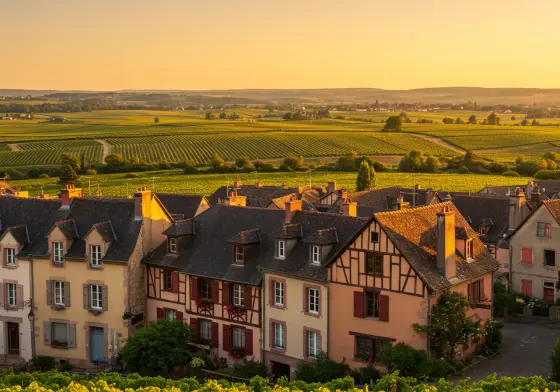
Car Rental in France
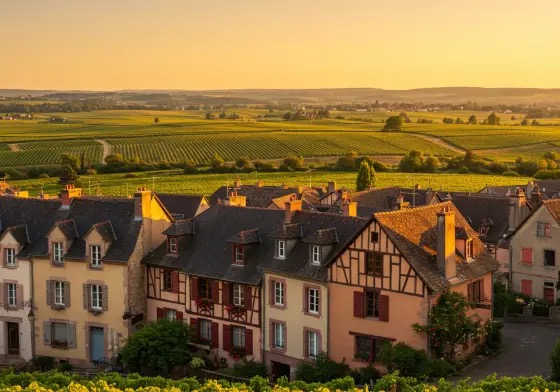
Dreaming of cruising the sun-drenched Côte d'Azur, or navigating the charming backroads of Provence? With a car rental in France, your journey through ancient villages and scenic vineyards awaits, on your own schedule.
Rental companies
The French car rental market is robust, featuring both major international chains like Hertz, Avis, Europcar, and Sixt, alongside numerous local agencies. While international brands offer consistency and widespread airport presence, local providers can sometimes offer more competitive rates or unique vehicle options. Aggregators like RentoRika streamline the comparison process, allowing you to view and book vehicles from various suppliers in one place, ensuring you find the best fit for your trip.
What documents you need
To rent a car in France, you will generally need a valid driver's license from your home country, held for at least one year (some companies require two years). An International Driving Permit (IDP) is highly recommended, especially if your license is not in a Roman alphabet, and is legally required for non-EU citizens. You'll also need a valid passport or national ID card and a major credit card in the main driver's name for the security deposit. The minimum age to rent is typically 21, though drivers under 25 may face a young driver surcharge.
Payment and deposit
Most car rental companies in France require a major credit card (Visa, MasterCard, American Express) in the main driver's name for both payment and the security deposit. Debit cards are generally not accepted for the deposit, though some premium agencies might allow them for payment if the deposit is secured by a credit card. Prepayment online often secures better rates, but the deposit will still be taken at pick-up. Cash payments for the deposit are almost never accepted. Deposit-free options are rare and usually involve purchasing comprehensive, zero-deductible insurance directly from the rental company.
How much rental costs
Car rental prices in France vary significantly by season, location, and vehicle type. Expect daily rates to range from approximately 25 EUR in the low season to around 70 EUR or more during peak summer months and holidays. Early booking, especially for popular destinations, can secure better deals. The lowest daily price can be as low as 15 EUR for a compact car during off-peak times, while luxury or larger vehicles will naturally cost substantially more.
Price by month, €
Traffic rules and fines
In France, driving is on the right-hand side of the road. Seatbelts are mandatory for all occupants. Speed limits are typically 130 km/h on motorways (110 km/h in wet conditions), 80 km/h on rural roads, and 50 km/h in urban areas. Be aware of numerous speed cameras. It is compulsory to carry a reflective safety vest and a warning triangle in your vehicle. Using a mobile phone while driving is strictly prohibited, even with a hands-free kit. Roundabouts are very common; yield to traffic already in the roundabout.
Parking
Parking in French cities can be challenging and expensive. Blue zones often require a parking disc (disque de stationnement), available at tabacs, indicating your arrival time for limited free parking. Paid parking is common, usually indicated by blue signs with a 'P' and a parking meter (horodateur) where you pay by card or coins. Underground car parks (parkings souterrains) are plentiful in larger cities. Fines for illegal parking are significant, approximately 35 EUR or more, and your car may be towed.
Fuel stations
Fuel stations are widely available across France. The most common types are Sans Plomb 95 (unleaded 95), Sans Plomb 98 (unleaded 98), and Gazole (diesel). Prices are regulated and tend to be higher on motorways. Expect to pay around 1.80-2.00 EUR per liter for petrol and slightly less for diesel as of 2026. Many stations are automated outside of business hours, requiring card payment. LPG (GPL) is less common but available in some areas.
Which car to choose
For city driving and navigating narrow village streets, a compact or economy car is ideal. If you plan extensive motorway travel or are carrying significant luggage, a mid-size sedan offers more comfort. For exploring mountainous regions like the Alps or Pyrenees, a car with a slightly more powerful engine is beneficial, though 4x4s are generally unnecessary unless you anticipate severe winter conditions. Families often opt for an SUV or a station wagon for space.
Pros
- Excellent road network, including well-maintained motorways (autoroutes).
- Freedom to explore rural areas, vineyards, and small villages inaccessible by public transport.
- Opportunity to set your own itinerary and pace.
- Convenient for carrying luggage and travel essentials.
- Access to stunning scenic routes, such as the Route Napoléon or the Alsace Wine Route.
Cons
- Toll roads (péages) on motorways can be expensive.
- Parking in major cities can be difficult and costly.
- Strict traffic laws and frequent speed cameras.
- High fuel prices compared to some other European countries.
- Navigating busy urban centers can be stressful for unfamiliar drivers.
You may also like
Frequently asked questions
Do I need an International Driving Permit (IDP) in France?
Yes, if you are not an EU citizen, an International Driving Permit (IDP) is legally required in France alongside your national driver's license. It translates your license into multiple languages and is recognized by French authorities.
Are there toll roads in France?
Yes, many of France's motorways (autoroutes) are toll roads (péages). You typically collect a ticket upon entry and pay at an exit booth, either manually or via automated lanes. Credit cards are widely accepted, and some lanes are reserved for electronic toll tags (e.g., Liber-t).
What is the minimum age to rent a car in France?
The minimum age to rent a car in France is generally 21 years old. However, drivers under 25 often incur a young driver surcharge, and some vehicle categories may have higher age restrictions (e.g., 25 or 26).
What side of the road do they drive on in France?
In France, traffic drives on the right-hand side of the road, and the steering wheel is on the left side of the car, as in most of continental Europe.
What documents do I need to pick up my rental car?
When picking up your rental car, you will need your valid driver's license, an International Driving Permit (if applicable), your passport or national ID, and the credit card used for the booking (must be in the main driver's name) to cover the security deposit.
Can I cross borders to neighboring countries with a rental car from France?
Most rental companies allow cross-border travel to neighboring EU countries, but it is crucial to inform the rental agency in advance. There may be additional fees or specific insurance requirements for certain countries.