Country
Car Rental in Germany
Open any city directly or jump straight to search with your chosen destination.
Cities
All cities in Germany


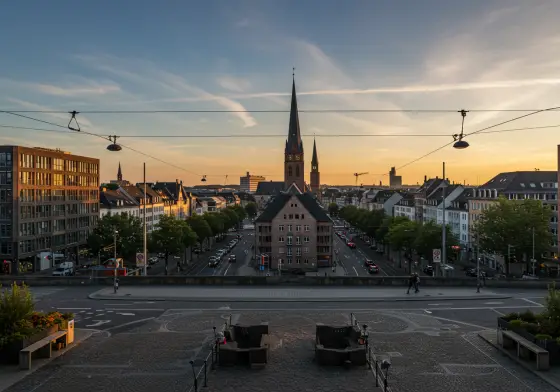



Car Rental in Germany
The iconic Romantic Road, winding through fairytale castles and picturesque villages, is just one of the unforgettable journeys awaiting you with a car rental in Germany. From the vibrant streets of Berlin to the serene Black Forest, having your own vehicle unlocks a land of diverse landscapes and rich history.

Rental companies
Germany's car rental market is robust, featuring major international chains like Hertz, Europcar, Sixt, and Avis, alongside reputable local German agencies. These providers offer a wide range of vehicles, from compact cars suitable for city driving to luxury sedans for business travel or scenic tours. Aggregators like RentoRika can help you compare prices and options from various suppliers, often securing more competitive deals than booking directly, especially for those looking for specific vehicle types or flexible pickup locations.
What documents you need
To rent a car in Germany, you generally need a valid driving license from your home country, held for at least one year (some agencies might require two years). An International Driving Permit (IDP) is highly recommended, and in some cases, legally required, especially if your national license is not in English or does not use the Latin alphabet. You will also need your passport or national ID card and a major credit card in the driver's name for the security deposit. The minimum age for car rental is typically 21, though drivers under 25 may incur a young driver surcharge and might be restricted to certain car categories.
Payment and deposit
Most car rental companies in Germany require a major credit card (Visa, MasterCard, American Express) in the main driver's name for both payment and the security deposit. Debit cards are generally not accepted for the deposit, though some local agencies might allow them for payment. Prepayment online can sometimes secure a better rate, but the deposit will still be taken at pickup. Deposit amounts vary widely, from a few hundred to over a thousand euros, depending on the car category and rental company. Deposit-free options are rare and usually involve expensive full insurance packages.
How much rental costs
Car rental prices in Germany fluctuate significantly based on demand, seasonality, and car category. Expect daily rates to range from approximately 30 EUR for a compact car during off-peak seasons to over 100 EUR for larger vehicles or during peak summer months and holidays. January and February typically offer the lowest prices, while August and December see the highest demand and thus higher costs. Booking well in advance, especially for summer 2026 travel, can help secure better rates.
Price by month, €
Traffic rules and fines
Germany's traffic rules are strict and enforced. Drive on the right and overtake on the left. The autobahn has advisory speed limits of 130 km/h, but sections have no official limit; however, always drive at a speed appropriate for conditions. Urban speed limits are typically 50 km/h, and rural roads are 100 km/h, unless otherwise signed. Use of mobile phones without a hands-free system is strictly forbidden. Fines for infractions can be substantial, for example, speeding fines can start from around 10 EUR and increase significantly with speed and location.
Parking
Parking in German cities can be challenging and expensive. Look for designated parking garages (Parkhaus) or marked street parking. "Parkscheibe" (parking disc) zones require you to display your arrival time. Blue zones often mean free parking for a limited time, while other zones may require payment at a machine. Illegally parked cars are subject to towing or significant fines, which can range from approximately 10 EUR to over 50 EUR.
Fuel stations
Fuel stations are plentiful across Germany, especially along major autobahns and in towns. You'll find Super E10 (95 octane with up to 10% ethanol), Super (95 octane), Super Plus (98 octane), and Diesel. E10 is generally the cheapest petrol option. Fuel prices are dynamic but expect petrol to be around 1.70-1.90 EUR per liter and diesel around 1.60-1.80 EUR per liter (approximate for 2026). Most stations accept credit cards, but it's wise to have some cash for smaller, independent stations.
Which car to choose
For city exploration and shorter trips, a compact or economy car is ideal due to easier parking and better fuel efficiency. If you plan to tour extensively, especially in rural areas or across different regions, a comfortable mid-size sedan or even an SUV would be suitable, particularly if you have luggage or multiple passengers. Winter tires are legally mandatory during winter conditions (typically October to Easter), so ensure your rental comes equipped if traveling during these months.
Pros
- Excellent road infrastructure, including the world-famous autobahns.
- Freedom to explore diverse regions, from mountains to coast, at your own pace.
- Well-maintained vehicles from reputable rental companies.
- Clear signage and generally disciplined drivers.
- Access to areas not easily reached by public transport.
Cons
- High fuel prices compared to some other countries.
- Strict traffic laws and significant fines for violations.
- Parking in major cities can be difficult and costly.
- Mandatory winter tires during specific seasons adds to the rental cost or complexity.
- High demand during peak season can lead to increased prices and limited availability.
You may also like
Frequently asked questions
Do I need an International Driving Permit (IDP) to rent a car in Germany?
Yes, an IDP is highly recommended and often legally required if your domestic license is not from an EU country or does not have a Latin script. It serves as an official translation of your license.
What is the minimum age to rent a car in Germany?
The minimum age is generally 21 years old, but some rental companies may require drivers to be 23 or even 25 for certain car categories. A young driver surcharge usually applies for those under 25.
Are winter tires required in Germany?
Yes, winter tires (or all-season tires marked with M+S and a snowflake symbol) are legally mandatory in Germany during winter conditions, typically from October to Easter. Ensure your rental car is equipped appropriately if traveling during these months.
Can I drive on the Autobahn without a speed limit?
While some sections of the Autobahn have no official speed limit, many do, and advisory limits of 130 km/h are common. Always pay attention to signage and drive at a speed appropriate for the road, weather, and traffic conditions.
How does parking work in German cities?
Parking can be found in designated garages (Parkhaus) or on the street. Look for signs indicating payment requirements (Parkscheinautomaten) or parking disc zones (Parkscheibe). Illegally parked cars can be towed or fined. It's often easier and safer to use parking garages in city centers.
What type of fuel should I use for my rental car?
Most rental cars in Germany run on either Super E10, Super (95 octane petrol), Super Plus (98 octane petrol), or Diesel. Always check the fuel type specified by your rental company or on the fuel cap of the car to avoid costly mistakes.