Country
Car Rental in Hungary
Open any city directly or jump straight to search with your chosen destination.
Cities
All cities in Hungary
Car Rental in Hungary
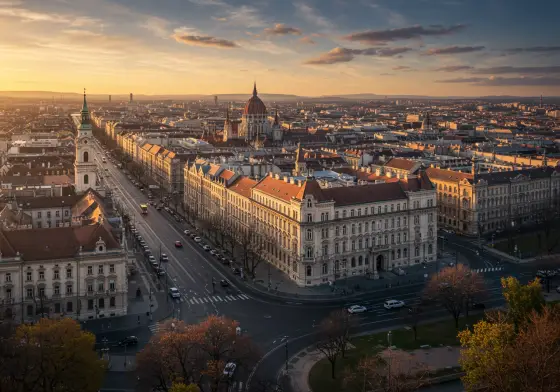
The scent of paprika and chimney cake hangs in the air, a delightful precursor to the adventures ahead as you consider car rental in Hungary. From cruising alongside the shimmering expanse of Lake Balaton in the summer sun to navigating the historic cobblestone streets of Eger, a rental car unlocks the full tapestry of this captivating Central European gem.
Rental companies
The Hungarian car rental market features a mix of well-known international brands like Hertz, Europcar, Avis, and Budget, alongside reputable local agencies. International chains typically offer newer fleets and comprehensive insurance options, often at higher prices. Local companies can sometimes provide more competitive rates and personalized service. Aggregators like RentoRika allow you to compare offers from various suppliers, both local and international, to find the best deal for your needs.
What documents you need
To rent a car in Hungary, you will generally need a valid driver's license from your home country. If your license is not in English and does not contain a photograph, an International Driving Permit (IDP) is highly recommended and often required. You must also present your passport or national ID card and a major credit card in the driver's name. The minimum age to rent is typically 21, though some companies may have a higher age requirement (e.g., 23 or 25) or charge a young driver's fee for those under 25. You should have held your license for at least one year, sometimes two.
Payment and deposit
Most car rental companies in Hungary require a major credit card (Visa, Mastercard, American Express) in the main driver's name for both the rental payment and the security deposit. Debit cards are generally not accepted for the deposit, even if used for the rental cost. The security deposit can range from a few hundred to over a thousand euros, depending on the vehicle class and rental company. Full prepayment is often required for online bookings, while some local agencies might accept cash for the rental fee, but rarely for the deposit. Deposit-free options are rare and usually involve purchasing premium insurance packages.
How much rental costs
Car rental prices in Hungary can vary significantly based on seasonality, vehicle type, and booking lead time. In 2026, expect daily rates to start from approximately 25-35 EUR for an economy car during the low season (winter months), rising to around 45-60 EUR or more during peak summer (July-August) and major holidays. Mid-range vehicles will naturally be higher. Booking well in advance, especially for summer travel, is advisable to secure better rates.
Price by month, €
Traffic rules and fines
In Hungary, driving is on the right side of the road, and seatbelts are mandatory for all occupants. Headlights must be on at all times, even during the day, outside of built-up areas. The legal blood alcohol limit is 0.00%, meaning no alcohol is permitted before driving. Speed limits are typically 50 km/h in urban areas, 90 km/h outside urban areas, and 130 km/h on motorways, unless otherwise indicated. Motorways require a vignette (e-vignette), which can be purchased online or at border crossings/petrol stations; rental cars usually have this pre-paid or it's an optional extra.
Parking
Parking in Hungarian cities, especially Budapest, can be challenging and expensive. Most city centers have paid parking zones, usually enforced via parking meters or mobile apps. Look for signs indicating parking zones and payment methods. Blue zones often mean paid parking, while yellow lines indicate no parking. Outside major cities, parking is generally easier and often free, particularly in smaller towns and rural areas. Always check local signage carefully to avoid fines.
Fuel stations
Fuel stations are widely available throughout Hungary, with major brands like MOL, Shell, and OMV. Unleaded petrol (95 and 98 octane) and diesel are standard. LPG is also available at many stations. Fuel prices are comparable to other Central European countries, fluctuating but typically around 1.60-1.80 EUR per liter for petrol and diesel. Most stations accept credit cards, but it's always wise to have some cash on hand for smaller, rural stations.
Which car to choose
For city driving and touring the relatively flat Hungarian countryside, an economy or compact car is usually sufficient. These vehicles are easy to park and fuel-efficient. If you plan to visit more remote areas, especially in the hilly regions around Lake Balaton or the Northern Mountains, a mid-size sedan or a small SUV might offer more comfort and ground clearance. For larger groups or families, a minivan provides ample space. Hungary's road network is generally well-maintained, so a 4x4 is rarely necessary unless you anticipate off-road adventures.
Pros
- Excellent road network, especially motorways, connecting major cities.
- Freedom to explore charming rural areas, thermal baths, and national parks at your own pace.
- Relatively affordable fuel prices compared to Western Europe.
- Opportunity to easily combine a trip with neighboring countries.
- Access to a wide range of car types, from budget to luxury.
Cons
- Strict zero-tolerance alcohol policy for drivers.
- Parking in Budapest and other large cities can be difficult and costly.
- Motorway vignettes are required and must be purchased if not included with the rental.
- Some rural roads can be narrow or less well-maintained.
- Traffic can be heavy in Budapest, especially during rush hour.
You may also like
Frequently asked questions
Do I need an International Driving Permit (IDP) in Hungary?
If your national driver's license is not in English and does not contain a photograph, an IDP is highly recommended and often required by rental companies and local authorities. It acts as a translation of your license.
What are the speed limits in Hungary?
Standard speed limits are 50 km/h in urban areas, 90 km/h on open roads, and 130 km/h on motorways. Always pay attention to road signs, as these can vary.
Is it easy to drive from Hungary to neighboring countries?
Yes, Hungary's central location makes it ideal for cross-border travel. Most rental companies allow international travel, but you must inform them in advance and may incur an extra fee and insurance surcharge. Check specific country requirements (e.g., vignettes for Austria, Slovakia).
Can I pay for my rental car with a debit card?
While some rental companies might accept a debit card for the rental fee, a major credit card in the main driver's name is almost always required for the security deposit. It's rare to find deposit-free options without purchasing premium insurance.
What is the cost of a motorway vignette in Hungary?
The cost of an e-vignette varies based on its duration (e.g., 10-day, monthly, annual). For a 10-day vignette for a passenger car, expect to pay around 15-20 EUR. Many rental cars come with this included, but always confirm with your supplier.