.webp)
Fiat 500 · 2023
manual · 4 seats
4 € / day
Destination · Portugal
The salty breeze of the Atlantic, carrying the scent of grilled sardines and vibrant fado music, beckons you to explore Lisbon beyond its charming tram lines. With your own vehicle, you can easily venture out to the golden sands of Cascais or the mystical palaces of Sintra, just a short, scenic drive away.
Lisbon, Portugal
The salty breeze of the Atlantic, carrying the scent of grilled sardines and vibrant fado music, beckons you to explore Lisbon beyond its charming tram lines. With your own vehicle, you can easily venture out to the golden sands of Cascais or the mystical palaces of Sintra, just a short, scenic drive away.

To rent a car in Portugal, you typically need a valid driving license from your home country, held for at least 1-2 years. An International Driving Permit (IDP) is highly recommended, especially if your license is not in English or a Latin alphabet. You will also need your passport or national ID card and a major credit card in the main driver's name. The minimum age for rental is usually 21-23, with young driver surcharges often applying for those under 25.
Car rental prices in Lisbon vary significantly by season and vehicle class. You can find economy cars starting from around 10-15 EUR per day during the low season, while SUVs and premium models will typically cost upwards of 50-70 EUR per day. During peak summer months, expect prices to increase by 50-100% across all categories, with economy cars averaging 30-50 EUR daily.
Price by month, €
In Portugal, you drive on the right side of the road. Speed limits are generally 50 km/h in urban areas, 90 km/h on rural roads, and 120 km/h on motorways, unless otherwise signposted. The legal blood alcohol limit is 0.05%. Headlights are mandatory in tunnels and during poor visibility. All occupants must wear seatbelts. Children under 12 or shorter than 135 cm must use an appropriate child restraint system.
Parking in central Lisbon can be challenging and expensive. Many street parking zones are paid (marked with blue or green lines) and operate on a pay-and-display system, typically from 9 AM to 7 PM on weekdays. Parking garages (parques de estacionamento) are widely available but can be costly. Consider parking on the outskirts of the city and using public transport to enter the center. Free parking is rare in popular areas.
Fuel (gasolina for petrol, gasóleo for diesel) is readily available at numerous stations throughout Lisbon and Portugal. Prices are comparable to other Western European countries, with petrol costing approximately 1.70-1.90 EUR/liter and diesel around 1.60-1.80 EUR/liter, subject to market fluctuations. Most stations accept major credit cards and cash.
For navigating Lisbon's narrow, hilly streets, a compact or economy car is often the most practical choice. If you plan extensive drives along the coast or through the interior, a comfortable mid-range sedan or a small SUV could be beneficial. Manual transmission cars are very common and often cheaper, but automatics are increasingly available, especially from larger rental companies. For rural exploration, a car with good ground clearance might be useful, though not strictly necessary for most tourist routes.
Pros
Cons
Cancellation policies vary by rental company and booking platform. Many offer free cancellation up to 24 or 48 hours before pickup, especially if you haven't pre-paid. Always check the specific terms and conditions of your reservation.
Some rental options require upfront payment to secure a better rate, while others allow you to pay upon arrival. Pre-payment often comes with cancellation flexibility, but it's crucial to read the terms carefully before booking.
Generally, a valid driving license from your home country is accepted. However, if your license is not in a Latin alphabet or English, an International Driving Permit (IDP) is strongly recommended and sometimes required by rental agencies or local authorities.
You will need your valid driving license, an International Driving Permit (if applicable), your passport or national ID card, and a major credit card in the main driver's name for the security deposit.
Picking up at Lisbon Airport (LIS) is often more convenient if you're arriving by air, as most major rental companies have desks there. It also allows for an easier departure from the city without navigating city traffic. City center pickups might be an option if you plan to spend a few days in Lisbon first and then rent a car for excursions.
Be aware of potential extra costs like young driver surcharges (for drivers under 25), additional driver fees, one-way rental fees, GPS rental, child seat rental, and fuel policies (e.g., full-to-empty vs. full-to-full). Always review the rental agreement thoroughly.
Nearby cities
102 offers from local rental companies · from 4 € per day
Fiat 500 · 2023
manual · 4 seats
4 € / day
_(10).webp)
Volkswagen T-Cross · 2023
manual · 5 seats
6 € / day
.webp)
Opel Corsa · 2023
automatic · 5 seats
6 € / day
_(2).webp)
Ford Focus · 2023
manual · 5 seats
7 € / day
.webp)
Volkswagen T-Roc · 2023
automatic · 5 seats
9 € / day
.webp)
Ford Focus SW · 2023
automatic · 5 seats
11 € / day
.webp)
Opel Grandland · 2023
automatic · 5 seats
13 € / day
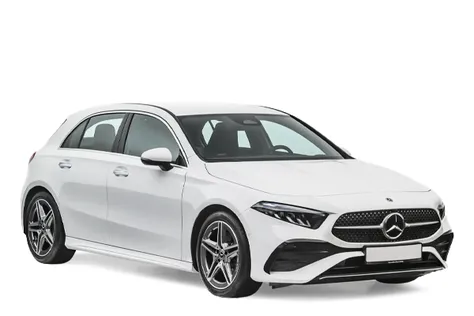
Mercedes A200 · 2023
automatic · 5 seats
14 € / day
_(9).webp)
Volkswagen Golf · 2023
automatic · 5 seats
14 € / day
.webp)
Nissan Juke · 2023
automatic · 5 seats
17 € / day
.webp)
BMW Series 1 · 2023
automatic · 5 seats
19 € / day
.webp)
Fiat Panda · 2023
manual · 5 seats
22 € / day