Country
Car Rental in Reunion
Open any city directly or jump straight to search with your chosen destination.
Cities
All cities in Reunion
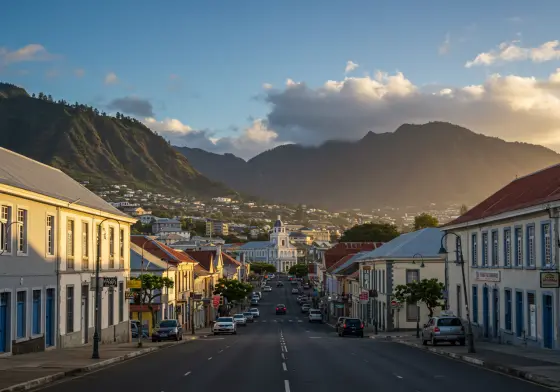
Car Rental in Reunion
Arriving at Roland Garros Airport, the easiest way to reach your accommodation in Saint-Gilles-les-Bains and begin exploring Reunion's volcanic heart is by picking up a rental car. With your own vehicle, the scenic coastal road to Piton de la Fournaise, one of the world's most active volcanoes, becomes an unforgettable day trip, allowing you to set your own pace and stop at breathtaking viewpoints along the way.

Rental companies
The car rental market in Reunion Island features a mix of well-known international chains like Europcar, Hertz, and Avis, alongside several reputable local agencies. These local providers often offer competitive rates and a more personal service. Aggregators, such as RentoRika, play a crucial role by comparing prices from both international and local suppliers, making it easier for travelers to find the best deal for their specific needs. Booking in advance, especially during peak seasons, is highly recommended to secure your preferred vehicle and rate.
What documents you need
To rent a car in Reunion, you will generally need a valid driver's license from your home country, provided it is written in a Latin alphabet. If your license is not in French, an International Driving Permit (IDP) is strongly recommended and often required by rental companies. You must also present your passport or national ID card and a major credit card in the driver's name for the security deposit. The minimum age for renting is typically 21 years old, and drivers under 25 may incur a young driver surcharge. Some luxury car categories might require drivers to be at least 25 or 27 years old, with several years of driving experience.
Payment and deposit
Most rental companies in Reunion require a credit card in the main driver's name for the security deposit, which is usually blocked on the card rather than charged. Full prepayment for the rental often secures better rates, though some agencies allow payment upon pickup. Debit cards are generally not accepted for the security deposit, even if they can be used for the rental fee itself. While some smaller local agencies might accept cash for the rental fee, a credit card remains essential for the deposit. Deposit-free options are rare and typically involve purchasing additional, comprehensive insurance packages directly from the rental provider.
How much rental costs
Car rental prices in Reunion Island can vary significantly based on demand, vehicle type, and booking lead time. During the low season, a compact car might start from approximately 25-35 EUR per day. However, during peak tourist seasons, particularly July-August and December-January, prices can easily double, ranging from 50-70 EUR or more for a similar vehicle. The overall average daily price for a standard economy car hovers around 40-55 EUR. Booking several months in advance is the best strategy to secure more favorable rates, especially for longer rental periods.
Price by month, €
Traffic rules and fines
Driving in Reunion is on the right-hand side of the road, and seatbelts are mandatory for all occupants. Speed limits are generally 50 km/h in urban areas, 90 km/h on main roads outside towns, and 110 km/h on expressways (though these are limited). Alcohol limits are strict, similar to mainland France, at 0.05% BAC. Mobile phone use is prohibited unless using a hands-free system. Roads can be winding and steep, especially in the interior, so cautious driving is advised. Roundabouts are common, and the rule is to give way to traffic already in the roundabout.
Parking
Parking in major towns like Saint-Denis, Saint-Gilles-les-Bains, or Saint-Pierre often requires payment, especially in the city centers. Look for 'P' signs indicating parking lots or 'Payant' signs for street parking. Parking meters are common, and you'll need local coins or a special parking card in some areas. Outside of urban centers, parking is generally free, particularly near hiking trailheads or beaches, though spaces can fill up quickly during peak times. Always ensure your vehicle is securely locked and avoid leaving valuables visible.
Fuel stations
Fuel stations are widely available across Reunion Island, particularly in and around towns and along main roads. The main types of fuel are unleaded petrol (Sans Plomb 95 or 98) and diesel (Gazole). Fuel prices are regulated by the local government and are generally consistent across the island, though they tend to be higher than in mainland France. As of 2026, expect petrol to be approximately 1.80-2.00 EUR per liter, and diesel slightly less. Most stations accept credit cards, but it's always wise to carry some cash, especially in more remote areas where card machines might occasionally be out of service.
Which car to choose
For most visitors to Reunion, a compact or economy car (e.g., Renault Clio, Peugeot 208) is sufficient for navigating the island's roads and offers good fuel efficiency. If you plan to explore the more rugged, unpaved paths leading to certain hiking spots or require more ground clearance for comfort, a small SUV or 4x4 (e.g., Dacia Duster, Suzuki Vitara) would be a better choice. However, a true 4x4 is rarely essential as most accessible tourist sites are reachable by paved roads. Consider a car with good air conditioning, especially during the warmer months.
Pros
- Freedom to explore remote areas and natural attractions not served by public transport.
- Flexibility to set your own schedule and itinerary.
- Convenience for carrying luggage, hiking gear, and beach equipment.
- Access to a wider range of accommodation options outside main towns.
- Opportunity to discover hidden viewpoints and local eateries off the beaten path.
Cons
- Roads in the interior can be very winding, steep, and narrow, requiring careful driving.
- Traffic congestion can be significant in major urban areas, especially Saint-Denis.
- Parking can be challenging and expensive in popular towns and tourist spots.
- Fuel costs are higher than in many other destinations.
- Some rental companies have strict insurance policies and high security deposits.
You may also like
Frequently asked questions
Do I need an International Driving Permit (IDP) for Reunion?
While a French-issued driver's license is ideal, if your national license is not in French, an International Driving Permit (IDP) is highly recommended and often required by rental agencies. It serves as an official translation of your license.
Are roads in Reunion difficult to drive?
Main roads along the coast and between major towns are generally well-maintained. However, roads into the cirques (Cilaos, Salazie, Mafate access points) and mountainous interior are often very winding, steep, and can be narrow. Drivers should be comfortable with mountain driving.
What is the minimum age to rent a car in Reunion?
Most rental companies require drivers to be at least 21 years old. Drivers under 25 typically incur a young driver surcharge, and some vehicle categories may have higher age requirements.
Is it easy to find parking in Reunion?
In major towns and popular coastal areas, paid parking is common and can be competitive, especially during peak hours. Outside of these areas, parking is generally easier to find and often free, such as near hiking trails or less crowded beaches.
What side of the road do they drive on in Reunion?
In Reunion, as a French overseas department, traffic drives on the right-hand side of the road. This is important to remember for visitors from countries where driving is on the left.