Country
Car Rental in Slovenia
Open any city directly or jump straight to search with your chosen destination.
Cities
All cities in Slovenia
Car Rental in Slovenia
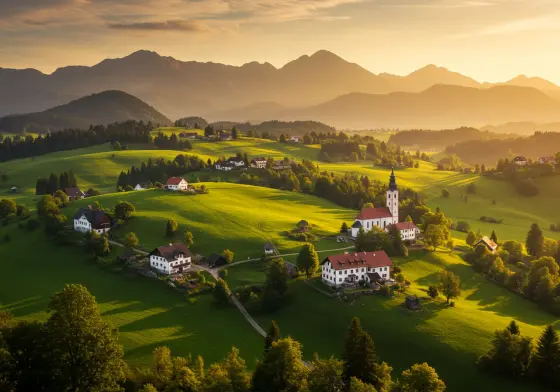
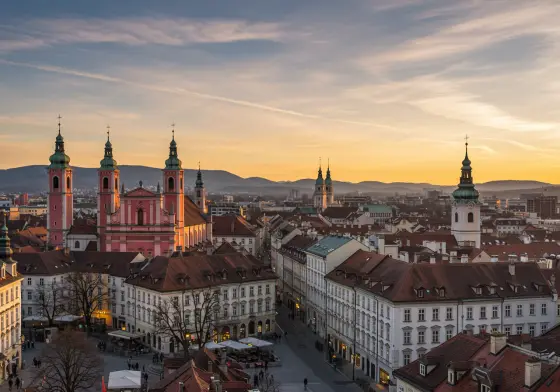
Lake Bled's iconic island church twinkles in the distance, beckoning you closer, and with a car rental in Slovenia, the journey there—and beyond, perhaps along the scenic Vršič Pass—becomes an adventure tailored to your whim. Forget the rigid schedules of public transport; your Slovenian exploration starts the moment you turn the key, ready to uncover hidden gems at your own pace.
Rental companies
The car rental market in Slovenia features a mix of well-known international brands like Sixt, Hertz, and Europcar, alongside reputable local agencies. International chains typically offer consistent service and newer fleets, while local providers might provide more competitive pricing or specialized vehicles. To compare options from various suppliers and find the best deals, consider using a booking platform like RentoRika, which aggregates listings from both types of companies.
What documents you need
To rent a car in Slovenia, you will generally need a valid driving license from your home country. If your license is not in English, German, French, Italian, or Slovenian, an International Driving Permit (IDP) is highly recommended and often required. You must also present a valid passport or national ID card and a credit card in the main driver's name for the security deposit. The minimum age to rent is usually 21, and drivers under 25 may incur a young driver surcharge. Some premium car categories might require drivers to be at least 25 or even 28 years old, and typically, you need to have held your license for at least one year.
Payment and deposit
Most car rental companies in Slovenia require a credit card in the main driver's name for both the rental payment and the security deposit. The deposit is usually blocked on your credit card and released after the car is returned undamaged. While some local agencies might accept debit cards for payment, a credit card is almost universally required for the deposit. Cash payments for the rental or deposit are very rare and generally not accepted. Deposit-free options are extremely uncommon and usually involve purchasing comprehensive insurance with zero excess, which effectively reduces the financial risk for the rental company.
How much rental costs
Car rental prices in Slovenia fluctuate significantly throughout the year, with the lowest rates typically found outside the peak summer season. You can expect daily prices to range from approximately 25 EUR during the off-season to 60 EUR or more in July and August. These prices are for economy or compact cars. Luxury vehicles or SUVs will naturally be more expensive. Booking in advance, especially for summer travel, is advisable to secure better rates and ensure vehicle availability.
Price by month, €
Traffic rules and fines
In Slovenia, you drive on the right side of the road. Seatbelts are mandatory for all occupants. Headlights must be on at all times, even during the day. Speed limits are typically 50 km/h in urban areas, 90 km/h outside urban areas, and 130 km/h on motorways. A reflective vest and first-aid kit are compulsory in the car. Slovenia has a zero-tolerance policy for alcohol consumption while driving. Vignettes are required for driving on motorways and expressways; rental cars usually come with one already affixed, but it's wise to confirm with your rental provider. Mobile phone use is prohibited unless using a hands-free system.
Parking
Parking in Slovenian cities, especially Ljubljana, can be challenging and expensive. Look for designated parking zones, which are often color-coded: blue zones for short-term parking, white zones for longer stays (paid), and yellow for residents only. Parking garages are a convenient option in city centers. In smaller towns and rural areas, parking is generally easier to find and often free. Always check signs for restrictions and payment methods, which typically involve pay-and-display machines or mobile apps.
Fuel stations
Fuel stations are widely available across Slovenia, including major motorways and smaller towns. Most stations offer unleaded petrol (bencin) and diesel (dizel). Electric vehicle charging infrastructure is growing, particularly in urban areas and along main routes, but is not as ubiquitous as traditional fuel stations. Fuel prices are regulated and tend to be similar across different brands. As of 2026, you can expect petrol to be around 1.50 EUR per liter and diesel around 1.45 EUR per liter, though these are approximate and subject to change.
Which car to choose
For most travelers exploring Slovenia, a compact or economy car is perfectly sufficient. These vehicles are easy to maneuver on narrow village roads and in city centers, and fuel-efficient for longer journeys. If you plan to venture into the mountainous regions extensively or travel with a lot of luggage, an SUV or a larger family car might offer more comfort and space. For winter travel, especially in the Alps, ensure your rental car is equipped with winter tires (mandatory from November 15 to March 15) and consider requesting snow chains if planning to drive on less-maintained mountain roads.
Pros
- Excellent road network, well-maintained and easy to navigate.
- Compact size of the country allows for easy day trips to various regions.
- Access to remote natural attractions and charming villages not served by public transport.
- Freedom to set your own schedule and explore at your own pace.
- Relatively low traffic outside major cities.
Cons
- Parking in popular city centers can be costly and difficult to find.
- Vignette required for motorways, though usually included with rentals.
- Strict traffic laws, including zero alcohol tolerance and mandatory headlights.
- Higher rental costs during peak tourist season (summer).
- Narrow roads in some older towns and mountainous areas can be challenging for inexperienced drivers.
You may also like
Frequently asked questions
Do I need an International Driving Permit (IDP) in Slovenia?
An IDP is recommended if your national driving license is not in one of the approved languages (English, German, French, Italian, Slovenian). It serves as a translation and is often required by rental companies and local authorities.
Are there toll roads in Slovenia?
Yes, Slovenia has a vignette system for its motorways and expressways. Rental cars typically come with a valid electronic vignette, but it's always good practice to confirm this with your rental provider upon pickup to avoid fines.
What is the minimum age to rent a car in Slovenia?
The general minimum age to rent a car in Slovenia is 21. However, drivers under 25 usually incur a 'young driver surcharge'. For certain vehicle categories, the minimum age might be higher, sometimes 25 or even 28.
Is it easy to find parking in Slovenian cities?
Parking in major cities like Ljubljana can be challenging and expensive, especially in the city center. It's often easier to find parking outside the immediate center or utilize parking garages. In smaller towns and rural areas, parking is generally more readily available and often free.
Are winter tires mandatory in Slovenia?
Yes, winter tires or all-season tires suitable for winter conditions are mandatory in Slovenia from November 15 to March 15, and at any time when winter conditions (snow, ice) are present. Rental cars will be equipped accordingly during this period.
Can I take my rental car from Slovenia to neighboring countries?
Most rental companies allow cross-border travel to neighboring countries like Croatia, Italy, Austria, and Hungary, but you must inform them in advance. There might be additional fees for cross-border insurance coverage, and specific restrictions may apply to certain vehicle types or countries.