.webp)
Volkswagen Golf · 2023
manual · 5 seats
13 € / day
Destination · Spain
Touch down at Madrid-Barajas Airport (MAD) and skip the hassle of public transport, heading straight to your hotel or out of the city toward the historic wonders of Toledo. With your own vehicle, day trips to Segovia's Roman aqueduct or the vineyards of Ribera del Duero are effortlessly within reach, transforming your Spanish adventure from urban exploration to a panoramic journey.
Madrid, Spain
Touch down at Madrid-Barajas Airport (MAD) and skip the hassle of public transport, heading straight to your hotel or out of the city toward the historic wonders of Toledo. With your own vehicle, day trips to Segovia's Roman aqueduct or the vineyards of Ribera del Duero are effortlessly within reach, transforming your Spanish adventure from urban exploration to a panoramic journey.

To rent a car in Spain, you generally need a valid driver's license (held for at least 1-2 years, depending on the rental company), an International Driving Permit (IDP) if your license is not from an EU country, a passport, and a credit card in the main driver's name. The minimum age for renting is typically 21, though drivers under 25 may incur a young driver surcharge.
Car rental prices in Madrid can vary significantly based on vehicle class and seasonality. Economy cars might start from around 20-30 EUR per day during off-peak times, while SUVs or premium vehicles could range from 60-120 EUR or more daily. Prices tend to surge during the high summer season and major holidays.
Price by month, €
In Spain, you drive on the right. Speed limits are generally 120 km/h on motorways, 90 km/h on main roads, and 50 km/h in urban areas. The legal blood alcohol limit is 0.05%, or 0.03% for new drivers. Headlights must be used in tunnels and during poor visibility. Seatbelts are mandatory for all occupants, and children under 135 cm must use appropriate child seats.
Parking in central Madrid can be challenging and expensive. Street parking is often regulated by blue and green zones (SER zones), requiring payment via meters or apps. Blue zones allow longer parking for visitors, while green zones prioritize residents. Underground parking garages are widely available but can be costly. Consider parking on the outskirts and using public transport for city exploration.
Both petrol (gasolina) and diesel (gasóleo) are widely available at service stations across Spain. Fuel prices are comparable to other Western European countries. Most stations accept major credit cards, but it's advisable to carry some cash, especially in more rural areas, though this is less common in the Madrid region.
For exploring Madrid's surroundings and typical Spanish roads, an economy or compact car is often sufficient and easier to navigate in smaller towns. If you plan to venture into mountainous regions like the Sierra de Guadarrama, an SUV might offer more comfort and capability. Manual transmission is common, but automatics are readily available if preferred.
Pros
Cons
Most car rental bookings through platforms like RentoRika offer free cancellation up to 24 or 48 hours before pickup. Always check the specific terms of your booking.
Yes, a valid credit card in the main driver's name is almost always required for the security deposit, even if you pay for the rental upfront with a debit card.
If your license is from an EU country, it's generally sufficient. For non-EU licenses, an International Driving Permit (IDP) alongside your national license is usually required by law in Spain.
Madrid-Barajas Adolfo Suárez Airport (MAD) is often the most convenient pick-up location, offering a wide selection of vehicles and competitive prices upon arrival. City center locations are also available but can be less accessible.
Yes, some motorways (autopistas) in Spain are toll roads. You can pay with cash or credit card at the toll booths. There are also electronic toll systems (Via-T) for frequent users.
The minimum age is typically 21 years old, but drivers under 25 may face a 'young driver' surcharge. Some premium vehicle categories might have a higher minimum age requirement.
69 offers from local rental companies · from 13 € per day
Volkswagen Golf · 2023
manual · 5 seats
13 € / day
.webp)
Hyundai i10 · 2023
automatic · 4 seats
14 € / day
.webp)
Volkswagen Polo · 2023
automatic · 5 seats
14 € / day
.webp)
Volkswagen T-Cross · 2023
manual · 5 seats
14 € / day
.webp)
Ford Focus · 2023
automatic · 5 seats
15 € / day
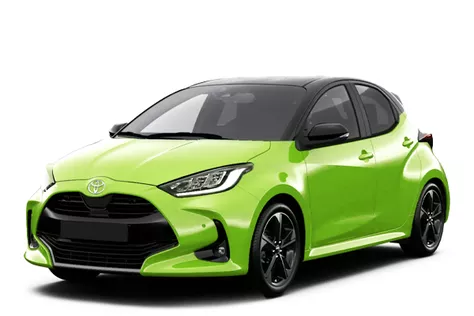
Toyota Yaris · 2023
automatic · 5 seats
15 € / day
.webp)
Audi A1 · 2023
manual · 5 seats
17 € / day
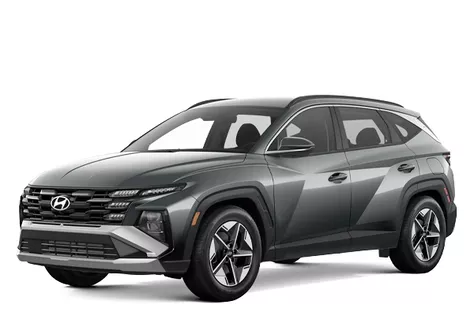
Hyundai Tucson · 2023
manual · 5 seats
21 € / day
.webp)
Fiat 500 · 2023
manual · 4 seats
25 € / day
_(1).webp)
Toyota Aygo · 2023
manual · 4 seats
25 € / day
.webp)
Nissan Qashqai · 2023
automatic · 5 seats
25 € / day
.webp)
SEAT Ibiza · 2023
manual · 5 seats
26 € / day