.webp)
Citroen C3 · 2025
manual · 5 seats
26 € / day
Destination · Spain
Experience Valencia at its most vibrant by renting a car during the Fall, when the city's historic avenues like Calle Colón are less crowded and the Mediterranean sun is still warm enough for a coastal drive along the Malvarrosa beach. With your own vehicle, you can easily venture beyond the city to discover the serene orange groves and traditional villages nestled in the Valencian countryside, all without the peak season bustle.
Valencia, Spain
Experience Valencia at its most vibrant by renting a car during the Fall, when the city's historic avenues like Calle Colón are less crowded and the Mediterranean sun is still warm enough for a coastal drive along the Malvarrosa beach. With your own vehicle, you can easily venture beyond the city to discover the serene orange groves and traditional villages nestled in the Valencian countryside, all without the peak season bustle.

To rent a car in Spain, you will typically need a valid driver's license (held for at least 1-2 years, depending on the rental company), a passport or national ID card, and a credit card in the main driver's name for the security deposit. If your driver's license is not from an EU country, an International Driving Permit (IDP) is usually required by law. The minimum age for renting is generally 21, though drivers under 25 may incur a young driver surcharge.
Car rental prices in Valencia can vary significantly based on vehicle class and seasonality. Economy cars might start from around €15-€25 per day during off-peak times, while SUVs or premium vehicles could range from €40-€80 or more daily. Summer months (June-August) typically see the highest prices due to increased demand, with winter offering more budget-friendly options. Keep in mind these are approximate figures for 2026.
Price by month, €
In Spain, you drive on the right-hand side of the road. Speed limits are generally 120 km/h on motorways, 90 km/h on national roads, and 50 km/h in urban areas, unless otherwise signposted. The legal blood alcohol limit is 0.05% (0.03% for new drivers). Headlights are mandatory in tunnels and during poor visibility. Seatbelts are compulsory for all occupants, and children under 135 cm must use an appropriate child seat.
Parking in Valencia city center can be challenging. On-street parking is often paid (blue zones) or restricted (green zones for residents), with varying time limits. Look for underground public car parks (marked with a 'P' sign), which are plentiful but can be costly. Outside the immediate city center, or in smaller towns, free parking might be easier to find. Always check local signs carefully.
Fuel stations are widely available throughout Valencia and the surrounding region. Most stations offer both 'Gasolina 95' (unleaded 95 octane) and 'Gasolina 98' (unleaded 98 octane), and 'Diésel' (diesel). Fuel prices are comparable to other Western European countries, fluctuating but generally around €1.60-€1.80 per liter for unleaded in 2026. Payment is usually by card or cash.
For city driving and exploring nearby beaches or towns, an economy or compact car is ideal for navigating narrow streets and easier parking. If you plan to venture into the more mountainous regions like the Sierra Calderona, a mid-size sedan or a small SUV might offer more comfort and better handling. Manual transmission cars are very common, but automatics are readily available if preferred.
Pros
Cons
The minimum age to rent a car in Valencia is typically 21 years old. Drivers under 25 may be subject to a young driver surcharge from most rental companies.
If your driver's license is not from an EU country, an International Driving Permit (IDP) is generally required by Spanish law in conjunction with your valid national license.
Yes, Valencia Airport (VLC) is a very convenient location to pick up your rental car, with many major rental companies having desks directly in the terminal or a short shuttle ride away.
Most rental companies in Valencia require a major credit card in the main driver's name for the security deposit. Debit cards are sometimes accepted for the rental cost but rarely for the deposit.
Cancellation policies vary by rental provider and specific booking terms. It's best to check the details provided during your booking process on RentoRika, as many offers allow free cancellation up to 24-48 hours before pickup.
Yes, some motorways in Spain, particularly the AP (Autopista de Peaje) routes, are toll roads. The A-7 or A-3 might have sections that are toll-free, but it's good to be aware of potential tolls if you plan to travel long distances.
117 offers from local rental companies · from 26 € per day
Citroen C3 · 2025
manual · 5 seats
26 € / day
.webp)
Opel Corsa · 2025
automatic · 5 seats
30 € / day

Fiat 500 C · 2015
manual · 5 seats
30 € / day
.webp)
Fiat 500 · 2023
manual · 4 seats
31 € / day
_(1).webp)
Toyota Aygo · 2023
manual · 4 seats
32 € / day
.webp)
SEAT Ibiza · 2023
manual · 5 seats
32 € / day
_(6).webp)
Volkswagen Golf · 2023
manual · 5 seats
33 € / day
.webp)
Audi A1 · 2023
manual · 5 seats
34 € / day
.webp)
Volkswagen T-Cross · 2023
manual · 5 seats
34 € / day

Lexus CT200 · 2013
automatic · 5 seats
35 € / day
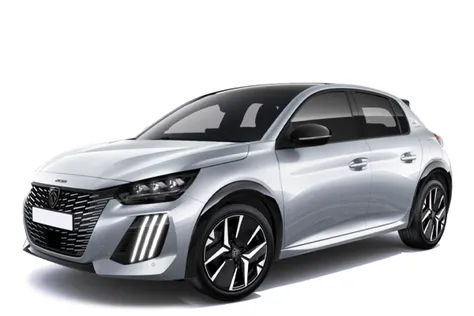
Peugeot 208 · 2024
manual · 5 seats
35 € / day
.webp)
Renault Clio · 2019
manual · 5 seats
35 € / day