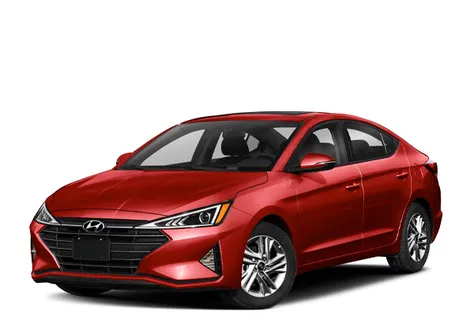
Hyundai Elantra · 2020
automatic · 5 seats
99 € / day
Destination · Spain
Spring and autumn are the prime seasons for a road trip through Cartagena, Spain, offering pleasant temperatures perfect for cruising the scenic coastal roads to sights like the Roman Theatre. With fewer crowds than summer, you'll enjoy a more relaxed pace as you navigate to hidden coves and charming fishing villages along the Mediterranean.
Cartagena, Spain
Spring and autumn are the prime seasons for a road trip through Cartagena, Spain, offering pleasant temperatures perfect for cruising the scenic coastal roads to sights like the Roman Theatre. With fewer crowds than summer, you'll enjoy a more relaxed pace as you navigate to hidden coves and charming fishing villages along the Mediterranean.

To rent a car in Spain, you will typically need a valid driver's license from your home country, a passport or national ID card, and a major credit card in the main driver's name for the security deposit. If your license is not in English or Spanish, an International Driving Permit (IDP) is strongly recommended or may be required by some rental agencies. The minimum age to rent a car is generally 21, though some companies may have a higher minimum for certain car categories, and drivers under 25 may incur a young driver surcharge. You usually need to have held your license for at least one or two years.
Car rental prices in Cartagena generally start from around 20-30 EUR per day for economy cars during the off-season. Mid-range and SUV vehicles can range from 40-70 EUR, while premium models might cost 80 EUR or more per day. Prices are highly seasonal, with significant increases during the peak summer months (July and August) where daily rates can easily double or triple, and around major holidays. Booking well in advance, especially for summer 2026, is recommended to secure better rates.
Price by month, €
In Spain, you drive on the right side of the road. Speed limits are generally 120 km/h on motorways, 90 km/h on national roads, and 50 km/h in urban areas, unless otherwise signposted. The legal blood alcohol limit is 0.5 mg/ml (0.25 mg/ml for new drivers and commercial drivers). Dipped headlights are mandatory in tunnels and during poor visibility. Seatbelts are compulsory for all occupants, and child seats are required for children under 135 cm tall or under 12 years old, appropriate for their size and weight. Using a mobile phone while driving is strictly prohibited.
In Cartagena, parking can be a mix of paid and free options. In the city center, you will primarily find paid street parking, often marked by blue lines ('zona azul'). You'll need to purchase tickets from nearby machines, usually payable by coins or card, for a limited duration. There are also several underground parking garages which offer more secure, albeit more expensive, options. Free parking can be found further away from the very core, especially near residential areas, but these spots fill up quickly. Always check signage carefully to avoid fines.
Fuel stations are widely available throughout Cartagena and the surrounding Murcia region. You'll find both petrol (gasolina) and diesel (gasóleo) readily available. Most stations are self-service, and payment can be made by cash or credit/debit card, often directly at the pump. Fuel prices in Spain are generally comparable to other Western European countries, and while they fluctuate, expect them to be around 1.60-1.80 EUR per liter for petrol and diesel in 2026. Many stations close for a siesta in rural areas, but those on main roads and in larger towns typically have extended hours or are open 24/7.
For exploring Cartagena's city center and short trips to nearby beaches, a compact or economy car is ideal due to narrow streets and easier parking. If you plan to venture further into the Sierra Espuña or along the more rugged coastal paths, an SUV offers better comfort and ground clearance. A car with manual transmission is most common and generally cheaper, but automatics are available if preferred. Given the generally good road conditions, most car types are suitable for the region.
Pros
Cons
The minimum age to rent a car in Cartagena, Spain, is generally 21 years old. Drivers under 25 may be subject to a young driver surcharge, and some premium car categories may have a higher minimum age requirement.
While not always legally required for all nationalities, an International Driving Permit (IDP) is strongly recommended if your national license is not in English or Spanish. It serves as a translation of your license and can prevent issues with rental agencies or local authorities.
Cartagena does not have its own airport. The nearest major airport is Murcia International Airport (RMU), also known as Corvera Airport. You can pick up rental cars directly at RMU, or at Alicante Airport (ALC), which is about an hour's drive away. Many companies also have offices in Cartagena city center.
The most common fuel policy is 'full to full', meaning you pick up the car with a full tank and return it full. This is usually the most cost-effective option. Other policies like 'full to empty' exist but often involve higher per-liter fuel charges from the rental company.
Basic third-party liability insurance is usually included in your rental price in Spain. However, it's advisable to consider additional coverage like Collision Damage Waiver (CDW) or Theft Protection (TP) to reduce your financial liability in case of damage or theft. Check what your credit card or personal car insurance might already cover.
Most car rental bookings offer free cancellation up to 24 or 48 hours before the pick-up time, especially if you haven't prepaid. Always check the specific cancellation policy of your booking, as terms can vary between rental providers and booking platforms like RentoRika.
4 offers from local rental companies · from 99 € per day
Hyundai Elantra · 2020
automatic · 5 seats
99 € / day
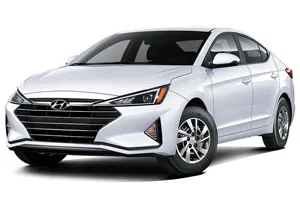
Hyundai Elantrа · 2020
automatic · 5 seats
99 € / day
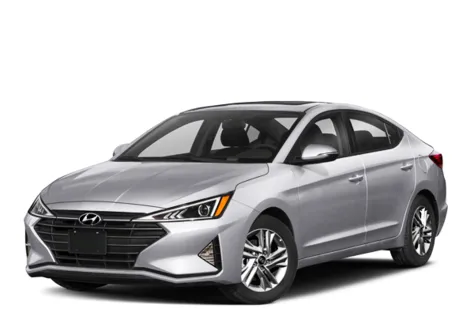
Hyundai Elаntra · 2020
automatic · 5 seats
99 € / day

Chevrolet Camaro · 2020
automatic · 4 seats
237 € / day