Destination · Spain
Car Rental in Pamplona
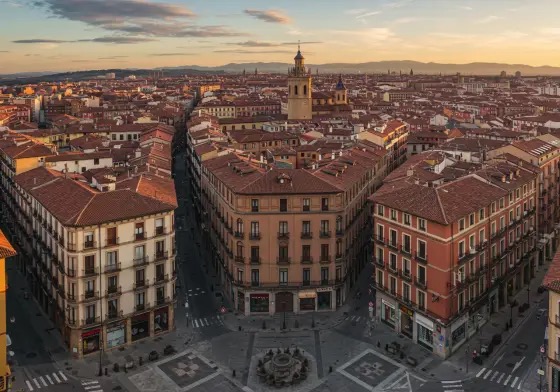
Ready to navigate Pamplona like a local? Whether you're planning to trace the ancient Camino de Santiago or simply explore the vibrant streets leading to the historic Plaza del Castillo, a rental car provides the perfect way to uncover the heart of Navarre at your own pace.
Search & book · Pamplona
Pamplona, Spain
Car Rental in Pamplona
Ready to navigate Pamplona like a local? Whether you're planning to trace the ancient Camino de Santiago or simply explore the vibrant streets leading to the historic Plaza del Castillo, a rental car provides the perfect way to uncover the heart of Navarre at your own pace.
Where to drive
- Explore the historic Roncesvalles Pass, a key point on the Camino de Santiago, approximately 45 minutes (45 km) northeast of Pamplona.
- Drive to the picturesque coastal city of San Sebastián (Donostia) in the Basque Country, about 1 hour and 15 minutes (100 km) northwest, famous for its beaches and culinary scene.
- Visit the stunning Urederra River source (Nacedero del Urederra), a natural reserve with turquoise pools, roughly 1 hour (55 km) southwest of Pamplona.
- Discover the medieval charm of Olite Castle, a royal palace, located approximately 30 minutes (40 km) south of the city.
- Journey through the Irati Forest, one of Europe's largest and best-preserved beech and fir forests, about 1 hour and 30 minutes (70 km) east of Pamplona.
What documents you need
To rent a car in Spain, you generally need a valid driving license from your home country, a passport or national ID card, and a major credit card in the main driver's name. If your license is not in a Roman alphabet or does not include a photo, an International Driving Permit (IDP) is required. Drivers must typically be at least 21 years old, and some companies may charge a young driver surcharge for those under 25. A minimum of one year's driving experience is also commonly required.
How much rental costs
Car rental prices in Pamplona vary significantly by car class and season. Economy cars might start from around 20-30 EUR per day during off-peak months, while SUVs or premium vehicles could range from 60-100 EUR or more daily. Prices can increase by 50-100% during the peak summer season, especially around the San Fermín festival in July.
Price by month, €
Demand by month
Traffic rules and fines
In Spain, traffic drives on the right. Speed limits are typically 120 km/h on motorways, 90 km/h on national roads, and 50 km/h in urban areas, unless otherwise signposted. The legal blood alcohol limit is approximately 0.05% (0.03% for new drivers). Headlights are mandatory in tunnels and during poor visibility. Seatbelts are compulsory for all occupants, and children under 135 cm must use an appropriate child seat.
Parking
Pamplona has a mix of paid and free parking. In the city center, street parking is generally regulated by blue (zona azul) or green (zona verde) zones, requiring payment at a meter for a limited duration. Blue zones are for visitors, while green zones are often for residents with permits, but visitors can sometimes park for a shorter period. Underground parking garages are also available and usually more expensive but offer better security and longer parking times. Free parking can be found further from the center, but spaces can be competitive.
Fuel stations
Fuel (gasolina for petrol, diésel for diesel) is widely available at service stations throughout Pamplona and surrounding areas. Prices are displayed per liter and are comparable to Western European averages, fluctuating but typically around 1.60-1.80 EUR/liter for petrol and 1.50-1.70 EUR/liter for diesel as of 2026. Most stations accept major credit cards, but it's wise to carry some cash for smaller, rural stations that might occasionally prefer it.
Which car to choose
For navigating Pamplona's city streets and shorter excursions, an economy or compact car is ideal due to easier parking and better fuel efficiency. If you plan to explore the Pyrenees or other mountainous regions, a car with a slightly more powerful engine or even an SUV might be more comfortable, especially for carrying luggage and passengers. Manual transmission is very common in Spain, but automatics are readily available, though often at a slightly higher price.
Pros
- Unrestricted access to the diverse landscapes of Navarre and the Basque Country, from mountains to coast.
- Flexibility to visit smaller villages and natural parks not easily accessible by public transport.
- Ability to travel at your own pace and create a personalized itinerary.
- Convenient for carrying luggage, especially if traveling with family or for longer trips.
- Often more cost-effective for groups compared to multiple train or bus tickets.
Cons
- Parking in Pamplona's historic center can be challenging and expensive.
- Navigating narrow streets in older towns might be difficult for inexperienced drivers.
- High season (July, August) sees increased rental prices and demand, making early booking essential.
- Fuel costs can add up, especially for extensive road trips.
Frequently asked questions
What is the cancellation policy for car rentals in Pamplona?
Most rental companies offer free cancellation up to 24 or 48 hours before your pick-up time. Always check the specific terms and conditions of your booking, as policies can vary.
Do I need a credit card for car rental in Pamplona?
Yes, a major credit card in the name of the primary driver is almost always required for the security deposit. Debit cards are generally not accepted for the deposit, even if they can be used for payment.
Can I pick up my rental car at Pamplona Airport?
Yes, Pamplona Airport (PNA) is a convenient location for picking up rental cars, with several major agencies operating there. It's often the easiest option for travelers arriving by air.
Is an International Driving Permit (IDP) required in Spain?
An IDP is required if your national driving license is not from an EU country, is not in a Roman alphabet, or does not include a photo. It must always be accompanied by your original valid driving license.
What is the best type of car for driving around Pamplona and the region?
A compact or economy car is sufficient for city driving and most regional trips. If you plan to explore mountainous areas extensively or carry more passengers/luggage, a mid-size or SUV might offer more comfort and power.